How Small Senior Homes Deliver More Secure, More Attentive Elderly Care
Business Name: BeeHive Homes of Floydada TX
Address: 1230 S Ralls Hwy, Floydada, TX 79235
Phone: (806) 452-5883
BeeHive Homes of Floydada TX
Beehive Homes assisted living care is ideal for those who value their independence but require help with some of the activities of daily living. Residents enjoy 24-hour support, private bedrooms with baths, medication monitoring, home-cooked meals, housekeeping and laundry services, social activities and outings, and daily physical and mental exercise opportunities. Beehive Homes memory care services accommodates the growing number of seniors affected by memory loss and dementia. Beehive Homes offers respite (short-term) care for your loved one should the need arise. Whether help is needed after a surgery or illness, for vacation coverage, or just a break from the routine, respite care provides you peace of mind for any length of stay.
1230 S Ralls Hwy, Floydada, TX 79235
Business Hours
Families usually begin thinking seriously about senior care after a scare. A fall. A medication blend. assisted living A baffled nighttime wander. I have actually sat at cooking area tables with daughters, kids, and spouses who believed they were just a year or 2 far from needing assistance, then suddenly realized the timeline had currently arrived.
What many do not understand at first is how various one assisted living setting can be from another. On paper, 2 neighborhoods can offer the exact same services and meet the exact same regulations, yet the day-to-day experience for an older adult can feel totally various. Among the most crucial differences is size.
Smaller senior houses, typically called residential care homes, board and care homes, or store assisted living, hardly ever spend money on glossy marketing. They sit silently in neighborhoods, often accredited for 6 to 20 citizens, sometimes slightly larger but still intimate. Over the years, I have actually viewed lots of families discover, often with relief, that these smaller homes can deliver safer and more mindful elderly care than very large centers, particularly for those who are frail, distressed, or easily overwhelmed.
This is not a universal guideline. Huge neighborhoods have their strengths too. But the structural benefits of small houses are extremely genuine, and worth understanding before you select a setting for someone you love.
What "Small" Truly Implies in Senior Care
There is no single legal definition of a small senior residence. The terms and licensing categories differ by state or nation, however in practice, "small" usually indicates a couple of things at once.
The structure itself typically looks like a large house instead of an organization. Hallways are much shorter. Dining rooms and living spaces are shared by everyone. Staff can stand in one area and see or hear the majority of what is happening.
The number of citizens stays low. A typical residential care home in the United States may look after 6 to 10 people. Some increase to 16 or 20 and still function as a tight-knit neighborhood. As soon as the census creeps above 40 or 50 locals, it becomes extremely tough to preserve the very same level of daily familiarity.
Staffing patterns concentrate on generalists instead of silos. In a big assisted living complex, the caretaker helping Mom dress in the morning may never as soon as enter the cooking area. In a small home, the aide who helps with bathing might likewise carry in groceries, set the table, or sit to share a cup of tea after lunch. That overlap matters for security and psychological security.
So when we talk about small senior residences, we are really explaining a cluster of features. Modest size. Home like design. Minimal resident count. Overlapping staff roles. These structural choices straight affect how securely and diligently elderly care can be delivered.
Visibility, Distance, and Actual Time Awareness
One of the greatest safety advantages of a small home is simple exposure. Not the video surveillance kind, however the direct human sort.
In a multi story building with long passages, a resident can get in a room, close a door, and remain hidden for hours unless personnel are fanatical about rounds. Even thorough caretakers can battle with this, because the physical environment works against them. You can just be in one corridor at a time.
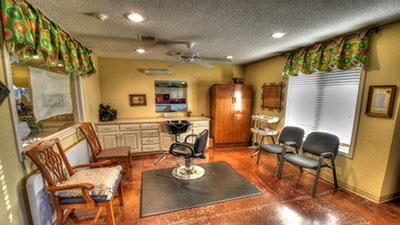
In compact houses, the reverse is true. Staff regularly tell me, "If Mr. G does not enter into the cooking area by 8:30, we just go examine him. He is constantly here by then." The structure design permits caretakers to see subtle modifications that would disappear in a larger space: a resident avoiding her typical card video game, another looking at his plate when he typically consumes with enthusiasm, someone suddenly needing the wall for support on the way to the bathroom.
Those small discrepancies are often the first hints of a urinary tract infection, a medication negative effects, a brewing depression, or an early respiratory disease. Catching them early is one of the most effective ways to keep older grownups out of emergency rooms.
In my experience, three useful characteristics make this possible in small senior houses:
- Staff do not have to walk half a mile of passages to examine someone. The time cost of regular check ins is lower, so the checks really happen.
- There are less residents to track mentally. When a caretaker is accountable for 5 or 6 people rather of 15 or 20, they can bring a clearer "baseline" photo of everyone in their head.
- Shared spaces are truly shared. A small dining room or living space draws most locals together many times a day, where they are informally observed without it feeling clinical.
This type of actual time awareness is a structure for much safer assisted living, whether someone is there for long term senior care or short term respite care.
Staff Ratios and What They Actually Mean
Families typically ask, "What is your personnel to resident ratio?" It appears like an unbiased measure. In practice, it is only part of the story, and it is regularly used as a marketing talking point instead of a meaningful indicator.
In a small residence, a 1 to 4 or 1 to 6 daytime ratio is not uncommon. During the night it may be 1 to 6 or 1 to 10, sometimes with a staff member sleeping on website however easily obtainable. On paper, a bigger assisted living facility may price estimate comparable ratios, particularly during the day.
Where small homes pull ahead is not only in numbers, however in how the work flows.
In larger buildings, caretakers invest an obvious portion of each shift walking in between remote spaces, waiting on elevators, addressing call lights at the back of the passage, or tracking down products from a main storage location. The ratio might look great, but a surprising quantity of staff time vaporizes into logistics.
By contrast, in a residence with 10 individuals under one roof and a single hallway, caretakers can put more of their energy into direct elderly care: actual hands on help, discussion, guidance, cueing, and reassurance. They are physically closer to the residents who need them.
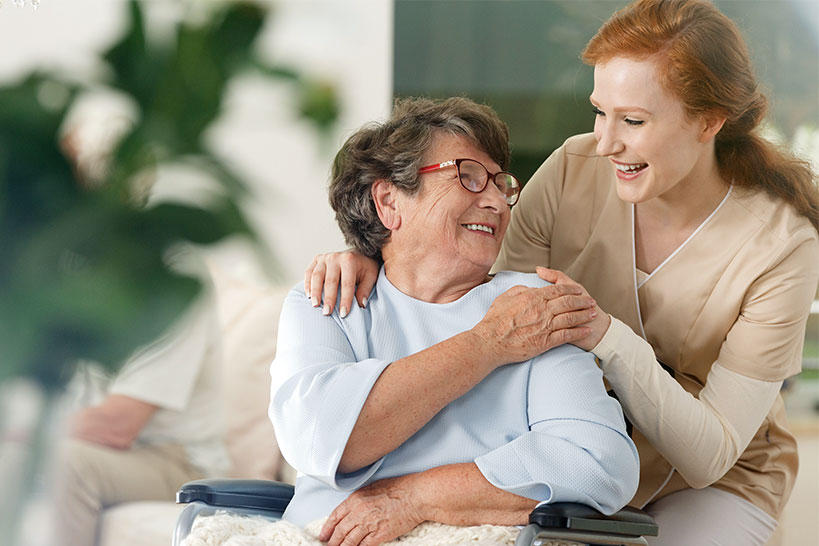
There is also less churn of unknown faces. Turnover in senior care is high everywhere, however small homes typically retain a core group of long term staff. When you only have a dozen people on the entire payroll, every departure injures. Owners and managers understand this and tend to invest more time in working with thoroughly and supporting workers so they stay.
That continuity is not just enjoyable. It is safer. A caretaker who has known Mrs. L for three years will observe the difference in between her normal mild lapse of memory and an abrupt, more major confusion. A brand-new hire who simply fulfilled her the other day may not capture it.
Care Tasks Do Not Get "Lost" as Easily
One of the quiet failures in big settings is the missed small job. Not the huge things like medication delivery, which normally have numerous checks, but all the little assistances that keep an older adult stable.
The compression of area and routines in a small house makes it simpler to get those things right.
If you serve breakfast at one long table and pour coffee for each person yourself, you instantly observe that Mrs. K has actually hardly touched her food for 3 days. If laundry is carried out in a single on website washer and dryer, the caretaker folding clothes will see that Mr. R has actually started having more nighttime accidents.
Because many tasks flow through the exact same few hands, patterns become visible. There is less fragmentation. The same person who helps a resident shower may likewise assist with dressing, see the state of the closet, notification whether dentures are in or out, and later on view how that resident browses the dining-room. Tiny hints that something is altering collect in a single person's awareness rather of being scattered throughout five different personnel roles.
This is particularly crucial for citizens with complicated chronic conditions. Someone with Parkinson's disease, for example, may need changes in medication timing based upon how they move throughout the day. A small group that sees those fluctuations up close can share observations with the nurse or doctor much more effectively.
Emotional Safety and the Speed of Daily Life
Safety is not just about falls and medications. Emotional safety matters simply as much, especially for individuals living with dementia, anxiety, or sensory overload.
Large buildings can be hectic, brilliant, and loud. Hallways full of strangers, overhead statements, big dining rooms clattering with dishes, and constantly altering personnel can all develop low grade stress. Some individuals prosper on that energy. Many others closed down or become agitated.
Smaller senior houses naturally perform at a calmer speed. There are less individuals moving, less background sound, and more chance for authentic, calm interactions. When you walk into an excellent small home at 10:30 in the early morning, you often see a handful of locals at the cooking area table talking with a caretaker, someone dozing in an armchair, music playing gently in the background. The environment feels more like a household home than an institution.
That emotional tone supports much better outcomes in numerous ways:
Residents with memory loss are less most likely to end up being overloaded or afraid. They learn the layout rapidly and recognize the exact same few faces.
Loneliness is more difficult to hide. With only eight or ten citizens, it is obvious when someone is withdrawing, and personnel have more bandwidth to sit for ten minutes and draw them out.
Behavioral concerns, like agitation or roaming, can frequently be managed with reassurance and routine instead of medication. Familiar environments and foreseeable rhythms are potent tools in elderly care.
I remember a female with moderate dementia who had actually bounced between 2 large assisted living communities in under a year. She grew significantly paranoid, kept attempting to go "home," and was near the point where her household was being informed she required a locked memory care unit. After relocating to a small residential home with simply 6 other homeowners, her behavior settled within weeks. Personnel could gently reroute her by saying, "Let us walk to your space together," and due to the fact that the corridor was brief and identifiable, she accepted the hint. Her requirement for antipsychotic medication dropped, and so did her threat of falls.
How Small Residences Manage Medical and Behavioral Complexity
It is important not to glamorize small homes. They have limits, and an accountable operator will be honest about them.
Unlike experienced nursing centers, most small assisted living homes are not geared up to deal with locals who need constant experienced nursing, feeding tubes, frequent injections that require a nurse, or really unsteady medical conditions. Regulations differ by jurisdiction, but in basic, residential care homes are designed for people who require assist with everyday activities, not extensive medical treatment.
That said, many small homes excel at supporting citizens with moderate medical or behavioral intricacy, as long as they can work carefully with outside clinicians. For instance:
An older adult managing diabetes may gain from consistent meal timing, close monitoring of appetite, and timely reporting of blood sugar trends to a going to nurse practitioner.
Someone with moderate to moderate dementia might do better in a small, foreseeable environment, where personnel can customize cues and routines to their specific history and preferences.
A frail senior with multiple medications might be safer when a couple of familiar caregivers coordinate straight with the primary care physician, instead of a rotating cast of personnel passing messages through multiple layers.
Where I see issues is when households or recommendation sources deal with a small home as a last option for locals with severe aggression or really intricate conditions that really exceed the home's scope. An excellent operator will know when continuous guidance by certified nurses or specialized behavioral personnel is essential. Pressing beyond those limitations endangers both safety and staff morale.
When you assess a small house, it is reasonable to request concrete examples of the sort of homeowners they look after effectively, and where they draw the line. Their answers ought to consist of both what they can do and what they cannot.
The Function of Respite Care in Testing the Fit
One of the most powerful tools families neglect is respite care. A short stay of a week or a month can serve two purposes at once. It provides the main caretaker a break, and it supplies a real world test of how well a specific setting fits the older adult.
Small senior homes are especially well fit to respite stays since they can integrate a new person quickly into day-to-day routines. There are fewer names to find out, fewer spaces to get lost in, and a core group of caregivers who are present across numerous shifts.
I often advise that families thinking about a relocation from home to assisted living organize an initial respite duration in a small home when possible. It permits concerns like these to be addressed with direct experience instead of uncertainty:
Does your loved one consume better in a household design dining setting?
Do they react well to the quieter rhythm and closer relationships?
Are staff able to handle specific care tasks such as transfers, toileting, or dementia associated habits safely?
If the response to the majority of those concerns is yes, then transitioning to irreversible home typically feels less like a wrenching modification and more like continuing a relationship that currently exists.

Comparing Small Houses with Larger Communities
There is no universal "finest" setting, just much better and even worse matches for particular individuals at particular times. It can help to believe in terms of in shape requirements rather than absolutes.
Here is a simple, high level comparison that shows patterns I have actually seen consistently:
|Element|Small senior house|Larger assisted living neighborhood|| --------------------------------|----------------------------------------------------------|--------------------------------------------------------------------|| Daily oversight|High, individual, continuous exposure|Variable, depends heavily on staffing and building design|| Social environment|Intimate, familiar faces, lower stimulation|Broader mix of individuals and activities, higher stimulation|| Activities and facilities|Simple, home based, more customized|Larger activity calendar, more official facilities|| Personnel connection|Fewer staff, more long term relationships|More personnel, greater turnover, less individual continuity|| Capability to soak up greater needs|Typically strong approximately a point, then should refer in other places|Sometimes more able to layer in services, but depends upon resources|
When I sit with families, I often frame the choice by doing this: If you had 10 to fifteen years of older adult life ahead of you and were still reasonably independent, a bigger neighborhood with lots of activities and peer groups may appeal. If you are currently handling considerable frailty, memory loss, or stress and anxiety, the safety and attention of a smaller environment often ends up being even more crucial than a big activity calendar.
How Small Homes Work with Families
One of the clearest distinctions families notice in small homes is the ease of communication.
You do not need to browse a hierarchy of receptionists, department heads, and voicemail boxes. You generally have a direct line to the owner or manager, and staff members know you by name. When you contact us to ask how Dad is doing, the individual responding to the phone has actually probably seen him within the last hour.
This tight loop makes it much easier to respond quickly when something changes. For instance, if a resident starts refusing a particular medication due to queasiness, caretakers can alert the family and physician the same day, often with specific observations: "She appears great an hour after breakfast, however around 11 she turns pale and holds her stomach." That level of information supports faster, more precise adjustments.
Family involvement likewise tends to integrate more naturally into everyday life. Dropping by with a preferred dessert, going to a small holiday event, sitting at the kitchen table throughout a visit - these are simple gestures, but they enhance a sense of connection in between "home" and "care home" that many elders need.
There are trade offs. Some small homes have less formal family education programming or support system, specifically compared to big senior care providers that operate multiple schools. If you want structured classes on dementia or caregiver stress, you may require to seek them through community companies or health systems. What you get instead is personalized, informal assistance from personnel who understand your relative very well.
Recognizing Quality in a Small Senior Residence
Not every small home is good, and scale alone does not guarantee security or listening. I have walked into beautiful houses that felt tense and chaotic, and modest settings that delivered extremely high quality elderly care.
When you visit or look into a small residence, consider a brief list of questions that go beyond décor and brochures:
- Do staff seem genuinely calm and unhurried, or do they look frenzied even with a small number of residents?
- Can caretakers describe each resident's regimens, preferences, and medical issues without constantly checking charts?
- Is the physical environment organized so that homeowners can navigate quickly, with clear paths, accessible restrooms, and minimal clutter?
- How are graveyard shift staffed, and what particular systems remain in place for keeping an eye on locals between evening and morning?
- When you ask about a current event - a fall, an illness - can the operator explain what they found out and what changed afterward?
The objective is to understand not just how the home looks on a good day, however how it responds when something goes wrong. Every care setting has falls, illnesses, and tough habits. The distinction in between average and exceptional senior care is what occurs after those events.
When a Small Home Is Not the Right Choice
Honesty about limits belongs to professionalism in elderly care. There are real scenarios where a small home, even a very good one, is not the best answer.
If somebody needs constant monitoring by licensed nurses, frequent intravenous medications, or extremely technical interventions, a competent nursing facility or medical facility based program is more appropriate.
If a resident has exceptionally unpredictable or violent habits that put others at threat, they may need a specialized behavioral health setting with staff trained and staffed particularly for that intensity of need.
If an older grownup is unusually extroverted and deeply attached to group activities, clubs, and large social events, a tiny residential home may feel confining or lonesome, even if staff are kind and attentive.
Finally, spending plans matter. Small homes sit at many price points, but in some markets, extremely customized assisted living in a small home can cost as much as or more than a large community. Other times it is the more budget-friendly option. Families require to weigh financial sustainability along with quality.
The key is to match environment, needs, and resources as realistically as possible, not to chase after an idealized picture of care.
Bringing All of it Together
After years of walking households through options, I have come to see small senior houses as one of the most underappreciated alternatives in the continuum of senior care. They do not match every person or every stage of illness, however when they are well run and attentively matched, they offer an unusual mix: safety rooted in distance and familiarity, and listening constructed into every day life instead of layered on as an extra.
Whether you are thinking about long term assisted living or short-term respite care, it deserves stepping beyond the large, branded neighborhoods and going to a couple of small homes tucked into residential areas. Listen not only to the marketing pitch, however to the sounds in the background, the rhythm of the day, the way residents respond when a caretaker strolls into the room.
The technical parts of care - medication management, bathing support, fall prevention strategies - matter a good deal. Yet in practice, the most powerful protectors of an older grownup's safety are frequently a familiar voice, a watchful eye at the best minute, and a daily environment developed on a human scale. Small senior houses, when they are succeeded, excel at offering precisely that.
BeeHive Homes of Floydada TX provides assisted living care
BeeHive Homes of Floydada TX provides memory care services
BeeHive Homes of Floydada TX provides respite care services
BeeHive Homes of Floydada TX supports assistance with bathing and grooming
BeeHive Homes of Floydada TX offers private bedrooms with private bathrooms
BeeHive Homes of Floydada TX provides medication monitoring and documentation
BeeHive Homes of Floydada TX serves dietitian-approved meals
BeeHive Homes of Floydada TX provides housekeeping services
BeeHive Homes of Floydada TX provides laundry services
BeeHive Homes of Floydada TX offers community dining and social engagement activities
BeeHive Homes of Floydada TX features life enrichment activities
BeeHive Homes of Floydada TX supports personal care assistance during meals and daily routines
BeeHive Homes of Floydada TX promotes frequent physical and mental exercise opportunities
BeeHive Homes of Floydada TX provides a home-like residential environment
BeeHive Homes of Floydada TX creates customized care plans as residents’ needs change
BeeHive Homes of Floydada TX assesses individual resident care needs
BeeHive Homes of Floydada TX accepts private pay and long-term care insurance
BeeHive Homes of Floydada TX assists qualified veterans with Aid and Attendance benefits
BeeHive Homes of Floydada TX encourages meaningful resident-to-staff relationships
BeeHive Homes of Floydada TX delivers compassionate, attentive senior care focused on dignity and comfort
BeeHive Homes of Floydada TX has a phone number of (806) 452-5883
BeeHive Homes of Floydada TX has an address of 1230 S Ralls Hwy, Floydada, TX 79235
BeeHive Homes of Floydada TX has a website https://beehivehomes.com/locations/floydada/
BeeHive Homes of Floydada TX has Google Maps listing https://maps.app.goo.gl/VQckTu3ewiBFL32A7
BeeHive Homes of Floydada TX has Facebook page https://www.facebook.com/BeeHiveHomesFloydada
BeeHive Homes of Floydada TX has an Youtube page https://www.youtube.com/@WelcomeHomeBeeHiveHomes
BeeHive Homes of Floydada TX won Top Assisted Living Homes 2025
BeeHive Homes of Floydada TX earned Best Customer Service Award 2024
BeeHive Homes of Floydada TX placed 1st for Senior Living Communities 2025
People Also Ask about BeeHive Homes of Floydada TX
What is BeeHive Homes of Floydada TX Living monthly room rate?
The rate depends on the level of care that is needed. We do an initial evaluation for each potential resident to determine the level of care needed. The monthly rate is based on this evaluation. There are no hidden costs or fees
Can residents stay in BeeHive Homes until the end of their life?
Usually yes. There are exceptions, such as when there are safety issues with the resident, or they need 24 hour skilled nursing services
Do we have a nurse on staff?
No, but each BeeHive Home has a consulting Nurse available 24 – 7. if nursing services are needed, a doctor can order home health to come into the home
What are BeeHive Homes’ visiting hours?
Visiting hours are adjusted to accommodate the families and the resident’s needs… just not too early or too late
Do we have couple’s rooms available?
Yes, each home has rooms designed to accommodate couples. Please ask about the availability of these rooms
Where is BeeHive Homes of Floydada TX located?
BeeHive Homes of Floydada TX is conveniently located at 1230 S Ralls Hwy, Floydada, TX 79235. You can easily find directions on Google Maps or call at (806) 452-5883 Monday through Sunday 9:00am to 5:00pm
How can I contact BeeHive Homes of Floydada TX?
You can contact BeeHive Homes of Floydada TX by phone at: (806) 452-5883, visit their website at https://beehivehomes.com/locations/floydada/,or connect on social media via Facebook or Youtube
Residents may take a trip to Wiley's Old Fashion BBQ and hamburgers . Wiley's Old Fashion BBQ and hamburgers offers familiar comfort food that residents in assisted living, memory care, senior care, elderly care, and respite care can enjoy during casual dining outings.